
Secure shopping

Banking and insurance
The Banking & Insurance sector – often referred to as the lifeblood of the real economy – is of vital importance in the modern credit-driven economic growth model. Among its functions are intermediation between savers and borrowers, ensuring funds are allocated efficiently; support of payment and settlement systems that facilitate trade and international economic relations; and provision of various products that mitigate risk and uncertainty. The accelerating pace of technological change, stricter regulation and shifting consumer habits are reshaping the traditional banking model and pushing the sector towards innovation-led growth.
Activities associated with Banking & Insurance are depositary and non-depositary credit intermediation and related activities, investment banking, securities brokerage, commodity contracts dealing and diverse financial investment activities. The sector also includes insurers, re-insurers and insurance brokerages, pension funds, health and welfare funds, monetary authorities, stock exchanges, and collection and credit agencies.
ISI Emerging Market Group Limited ("The Company") is a subsidiary of Echo Bidco Limited, a Company registered in England and Wales under number 12577583 whose registered office is at BlueFin, Level 1, 110 Southwark Street, London, SE1 0SU, United ...
View more details
Brazil's fintech ecosystem has entered a phase of maturity in which mergers and partnerships have become increasingly common strategic tools. The combination of greater interoperability, the emergence of new business models, and more seamless ...
View more details
The Association of Southeast Asian Nations (ASEAN) is a diverse landscape in terms of infrastructure as it includes a world leader such as Singapore alongside developing economies that are currently in the process of upgrading and expanding their ...
View more details
ISI Emerging Market Group Limited ("The Company") is a subsidiary of Echo Bidco Limited, a Company registered in England and Wales under number 12577583 whose registered office is at BlueFin, Level 1, 110 Southwark Street, London, SE1 0SU, United ...
View more details
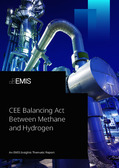
The electricity sector in CEE has shown distinct patterns in installed capacity, generation, consumption, prices, external trade and investment compared with broader EU trends. Poland has clearly dominated the region in installed capacity, with an ...
View more details
Economic activity in Latin America has shown signs of recovery during 2024 and 2025. According to the International Monetary Fund's updated World Economic Outlook released in January 2026, regional GDP is now projected to grow by 2.4% in 2025, ...
View more details
The ASEAN region, as covered by the scope of this report, comprises of the five countries of Indonesia, Malaysia, the Philippines, Thailand, and Vietnam. Only in case of the performance of regional external trade, it reflects the performance of the ...
View more details
In H1 2025, Colombia's food and beverage manufacturing recovered from the low-growth phase that characterised most of 2023-2024. GVA expanded due to fewer restrictions on the supply side: availability and pricing of key agricultural inputs improved, ...
View more details
According to the Brazilian Food Industry Association (ABIA), Brazil's food and beverage industry strengthened its role as a cornerstone of the national economy in 2024, processing 283mn tonnes of agricultural goods, representing 10.8% of GDP. The ...
View more details
Brazil's wood and paper sector is a major contributor to the national economy, with global competitiveness rooted primarily in its natural advantages. Favourable climate conditions, continuous advances in tree genetics, widespread adoption of forest ...
View more details